Trees are socialists and other things you need to know

.png)
I've been thinking a lot lately about attention. About how much of it gets claimed by headlines, algorithms, billionaires and the general weirdness of being alive right now.
Working in climate advocacy means spending a lot of time looking directly at some difficult realities. But one of the things this work has taught me is that what we pay attention to shapes how we feel about the world.
And it can be easy, when you're deep in the feed, to forget that there is a world outside absolutely teeming with life and wonder and mystery and magic. Choosing to notice this is perhaps one of the most radical things we can do.
So this World Environment Day, here are a few things I've learned recently that have helped me do exactly that.
Sea otters hold hands when they sleep so they don’t drift apart. This remains the best theory of change I’ve ever encountered. Find your people, hold on to them, build something together.
There are roughly 20 quadrillion ants on earth. They collectively outweigh all wild animals and birds. They have been building infrastructure and running societies for roughly 140 million years. How good.
Ecology comes from the word ‘oikos’ meaning home. Economy also comes from the same root – oikos + nomos = the management of home. We took one idea, made two words, then spent 200 years pretending they were opposites. Funny how that catches up with you.
Did you know that Fight, Flight or Freeze came from a study of men only? Turns out the response for women is actually tend and mend – caring, connecting, community building – which explains a lot.
Every glass of water you drink contains molecules that have passed through dinosaurs, glaciers, clouds, whales and countless other living creatures. We are part of a very old story.
If the internet feels like it's sucking all the oxygen out of your life, I highly recommend creating what democratic enthusiasts call a “third space”. You can do this by organising a talk, film screening, band night or bake sale. Make it dinosaur themed if you like.
The average Australian generally recognises more brand names than bird calls. In what may be the most encouraging cultural trend of the decade, more and more people seem determined to do something about that.
Did you hear that the Economy of Care is absolutely booming? People are shifting investments out of doomscrolling and into higher-performing assets like checking on neighbours, growing veggies and community organising. Experts predict continued growth in soup, seedlings and solidarity
The moon is drifting away from us at about 3.8cm per year, about the same rate as our fingernails grow. I don't know what this means.
A trillionaire is trying to colonise Mars while the possum in my mandarin tree out front seems pretty happy living here on Earth. I trust the possum’s judgement much more.
Lawns are weird. They’re an aesthetic hangover of commoners wanting to be like nobility, and now cover an estimated 23 per cent of the entire urban land area on the planet. Tear up your turf! End the empire and reclaim your sovereignty one lawn at a time.
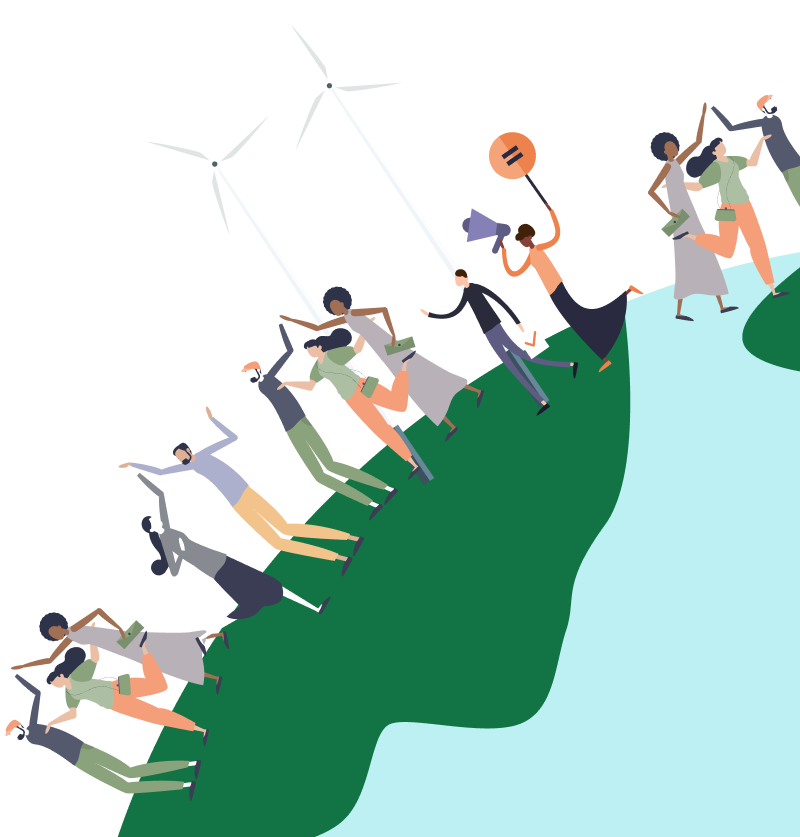
Trees are basically socialists. They spend their entire lives making food from sunlight and then quietly share it underground with all their neighbours.
Wombat poo is square. No further comment.
Koalas have fingerprints indistinguishable from humans, so somewhere in the universe there is a crime scene that could theoretically be pinned on a koala. Eat your heart out Patricia Cornwall.
The Earth is approximately 4.5 billion years old. If its history were compressed into a single day, humans would arrive in the last few seconds before midnight. And somehow we convinced ourselves we're the main character.
Here’s the last thing I’ll say about staying steady in these times – cynicism is not intelligence, no matter how many people are selling it on small screens. Step outside. This stunning planet we call home is full of weird little creatures holding hands, growing food and helping one another survive.
And humans are not separate from that story. The people I find most hopeful right now aren't the ones insisting everything will be fine. They're the ones doing something about it – protecting ecosystems, caring for Country, organising communities and looking after one another.
At Groundswell, that's what we're trying to do every day by bringing people together to support the organisers, communities and changemakers building a safer, fairer future.
We fund climate action. You can too. Donate now and help us back the people building a more hopeful world.
.png)
%20(4).png)